
About Juneau Hydropower Inc
Juneau needed energy security and needed hydropower energy that was more secure from the Snettisham avalanche hazard zone, and a reliable power supply to strengthen the grid. Enter Juneau Hydropower.
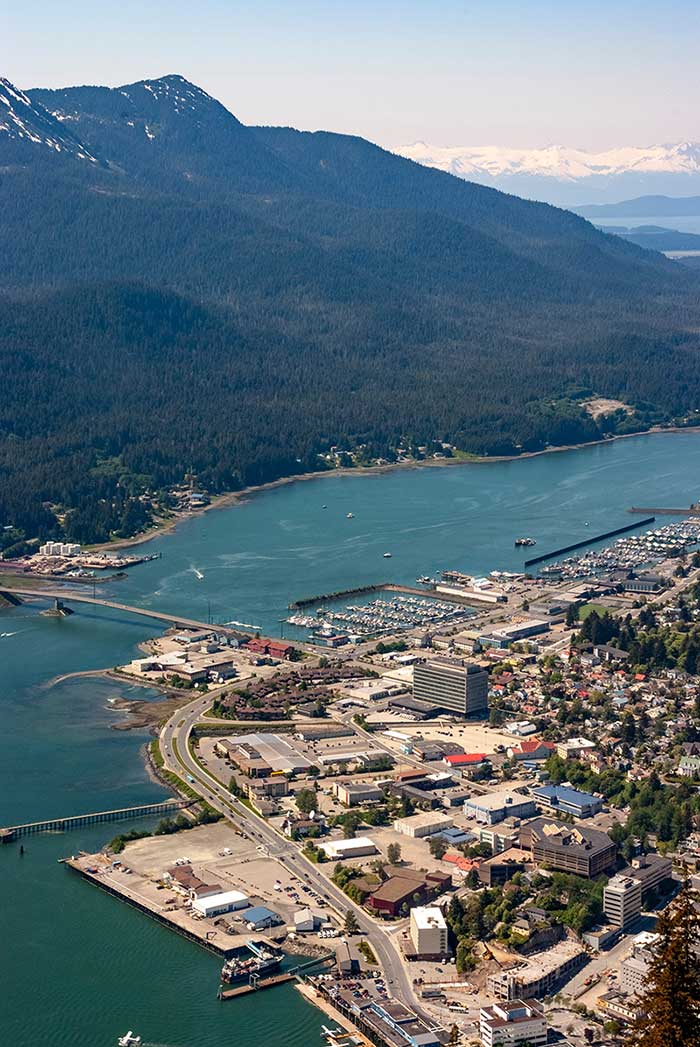
Juneau Hydropower was first envisioned in 2009 by some Juneau investors who saw a Juneau energy problem. Juneau needed energy security and needed hydropower energy that was more secure from the Snettisham avalanche hazard zone. They also saw large electrical customers wanting low-cost and secure hydropower that were currently “stuck on diesel”. As they predicted years ago, Juneau has seen growth in the need for industrial energy, continued growth in electrical transportation and a growing demand to convert and transform fossil fuel based heating to sustainable, reliable, and locally owned hydropower facilities that are responsive to the needs and community values of Juneau.
Knowing that Juneau’s need for electricity would only grow, these environmentally friendly developers began exploring the opportunity for a hydroelectric facility at Sweetheart Lake.
Now, after 16 years of effort millions of dollars, Juneau Hydro has become a certified Public Utility. Ameresco is the EPC who will soon begin construction on the Sweetheart Lake facility that will provide 19.8 MW, utilize large battery storage to provide “firm” clean energy to Juneau customers.
Sweetheart Lake has been funded by local Juneau investors who hold a strong belief in our community values to maintain Juneau as a great place to do business, find a good job, and raise a family. It also builds on Juneau’s vision for energy sustainability well into the future.
Duff Mitchell, Managing Director
Duff Mitchell grew up in downtown Juneau and has raised his children, and now enjoys his grandchildren, in the community he has long called home. His deep roots in Juneau give him a strong understanding of the community’s values, priorities, and economic needs.
Duff has more than 25 years of experience analyzing, developing, and building businesses across Southeast Alaska, including seafood, timber, telecommunications, mining services, and hydropower. Throughout his career, he has focused on innovation, job creation, and strengthening Alaska’s economic future while maintaining a responsible environmental balance. His work has included developing, patenting, and trademarking value-added salmon products, as well as advancing new business opportunities across multiple industries in Southeast Alaska.
Duff is a veteran and leads a veteran-run utility. He is a graduate of the U.S. Army Airborne School and the U.S. Army Command and General Staff College and served in Operation Iraqi Freedom.
Duff holds both a BBA and an MBA. He served for more than 20 years on the City and Borough of Juneau’s Fisheries Development Board and currently serves as a Commissioner on the CBJ Juneau Commission on Sustainability. Duff also serves on the Board of Directors of the Alaska Energy Authority, helping advance projects and policies that strengthen Alaska’s energy infrastructure, improve reliability, and reduce energy costs for Alaskans.
The Sweetheart Lake Build Team
These entities are key partners is making the Sweetheart Lake facility a reality.

Ameresco
Ameresco, Inc. (NYSE:AMRC) is a leading energy infrastructure solutions provider dedicated to helping customers reduce costs, enhance resilience, and decarbonize to net zero in the global energy transition.

Thyssen Mining
The Thyssen Mining Group of Companies is a leading worldwide team providing full-service underground development and mining contracting.

Delve Underground
Delve Underground is a tunnel design and heavy civil engineering firm, specializing in the transportation, water, wastewater, and energy industries.

Western Marine Construction, Inc.
Serving the public and private business sectors for over 60 years, Western Marine’s specialized marine capabilities include remote logistics, pile driving, underwater blasting and excavation, rock breakwaters, underwater drilling, socketing, pile anchor systems, in-water pipelines, fuel systems, fire systems, outfalls, diving, salvage, and surveying.
We Live Here Too.
We Are Your Home Team Hydro.
They share the same local community values that you do, and they realize that if Juneau is to thrive into the future, it needs to grow in a sustainable and cost-effective manner.
Plus, Sweetheart Lake Hydropower represents several benefits for Juneau, from job creation to lower energy prices.
FAQ
What is the Juneau Hydropower Utility System?
The Juneau Hydropower Utility System is JHI’s integrated clean-energy utility system for Juneau, Alaska. The system includes hydropower generation, high-voltage transmission, battery energy storage, submarine cable, fiber optic communications, substations, and an entire 106 square mile certificated electric utility service territory separate from any other utility.
The system includes:
- The 19.8 MW Sweetheart Lake Hydroelectric Project
- Approximately 56 miles of high-voltage transmission infrastructure
- Utility interconnections with the Juneau grid
- Submarine power and fiber optic cable systems
- A planned 10 MW / 20 MWh Battery Energy Storage System (BESS)
The system is designed to provide long-term firm renewable energy, energy security, grid reliability, communications infrastructure, and economic growth for Juneau and Southeast Alaska.
Is JHI a regulated utility?
Yes. Juneau Hydropower, Inc. is a certificated electric public utility regulated by the Regulatory Commission of Alaska (RCA). JHI holds CPCN No. 768 for its approved utility service territory and has a legal obligation to serve current and future customers within that territory.
Is Juneau Hydropower locally owned and operated?
Yes. Juneau Hydropower is locally owned and intends to locally operate and maintain the utility system in Juneau for the long-term benefit of the community.
What are the main public benefits?
The Juneau Hydropower Utility System provides:
- Firm renewable hydropower
- Reduced diesel generation
- Improved grid reliability
- Battery-backed energy resilience
- Fish-friendly renewable energy
- New high-voltage transmission infrastructure
- Communications and fiber infrastructure
- Support for federal and Coast Guard operations
- Local and statewide economic growth
- National, state, and local energy security for future generations
How large is JHI’s service territory?
JHI’s utility system represents approximately 106 square miles of certificated electric utility service territory in the City and Borough of Juneau. The service territory is about five times larger than Manhattan.
What is the main generation project?
The primary generation project is the 19.8 MW Sweetheart Lake Hydroelectric Project located about 30 miles south of Juneau. It is clean, sustainable, fish-friendly hydropower designed to provide firm renewable energy to Juneau and Southeast Alaska.
Why is the Sweetheart Lake Project significant?
Sweetheart Lake is one of the most significant new traditional dam-storage hydropower projects advanced in Alaska and the United States in decades.
The project:
- Is the largest traditional dam-storage hydropower project of about 20 MW advanced in Alaska since 1994
- Represents one of the largest new traditional dam-storage hydropower projects of its size advanced in the United States since 1994
- Adds firm renewable storage power to Juneau’s isolated electric grid
- Creates long-term renewable energy and storage infrastructure for Alaska’s capital city
How much energy will the project produce?
Sweetheart Lake is expected to generate approximately 116,000 MWh per year, equal to about 116 million kilowatt-hours annually.
The project adds over 20% new renewable generation to Juneau’s electric system and strengthens long-term energy security for the region.
Does the project have permits and licenses?
Yes. The project has completed major federal environmental review and received its original FERC license.
Does the project have all required land tenure, easements, and rights-of-way?
Yes. The project has secured the required land tenure, easements, permits, utility corridor agreements, and rights-of-way necessary for the approved utility system, transmission corridors, interconnections, and submarine cable routes.
Has USDA/RUS accepted the federal environmental review?
Yes. USDA Rural Utilities Service adopted and relied upon the FERC Final Environmental Impact Statement for its environmental review. Addtionally, the USDA RUS has conducted an Environmental Assessment on the Northern Transmission line and BESS of the utility system and issued Finding of No Significant Impact (FONSI).
Is the hydroelectric facility fish-friendly?
Yes. The project is designed as fish-friendly hydropower and helps demonstrate how modern hydropower can harmonize with salmon protection, restoration, and long-term fishery support.
The licensed project includes:
- Fish screens
- Fish exclusion structures
- Minimum stream flows
- Pulse flows for fish movement
- Spawning habitat monitoring
- Potential gravel augmentation
- Sockeye smolt collection and transport systems
These measures are designed to protect and potentially increase Sweetheart Creek sockeye salmon returns.
Does JHI have authority to use and interconnect with the Juneau grid?
Yes. The RCA approved the required interconnection, transmission service, and transmission accommodation agreements necessary for JHI to interconnect with and use the Juneau transmission grid.
What grid agreements have been approved?
Approved agreements include:
- Mist Island interconnection agreement
- Lena Substation interconnection agreement
- Transmission and Ancillary Services Agreement
- Transmission Accommodation Agreement
Will the Sweetheart Lake Project raise electric rates?
No. The project was developed to safely increase the supply of low-cost renewable energy, improve reliability, and help stabilize long-term electricity costs and over time will lower rates just like the Snettisham Project. Hydropower, over the long term, is the lowest cost alternative.
Sweetheart Lake adds more than 20% new renewable generation to Juneau's electric system. Hydropower has no fuel cost and is not exposed to the volatility of global oil markets.
The RCA did not require AEL&P customers to fund the project. The RCA-approved agreements require JHI to pay major project-specific interconnection and transmission-related costs.
As with all utilities, rates remain subject to RCA oversight. The purpose of the project is to
provide additional low-cost renewable energy, strengthen energy security, and support long-term affordability for Juneau consumers.
Will Juneau Residents Be Forced to Pay for Juneau Hydropower's Project?
No. The Regulatory Commission of Alaska (RCA) has repeatedly required that project-
specific costs be borne by the party causing those costs, and the RCA-approved agreements
place substantial financial responsibility on Juneau Hydropower (JHI), not AEL&P
ratepayers.
Some opponents have claimed that Juneau residents will be forced to subsidize the Sweetheart Lake Project through higher electric rates. The actual RCA orders and agreements tell a different story.
JHI Must Pay for Its Own Interconnection Facilities
Under the RCA-approved Interconnection Agreement:
- JHI must construct and pay for its own interconnection facilities.
- If AEL&P performs any interconnection construction work, JHI must reimburse AEL&P for the actual costs incurred.
- JHI is responsible for costs associated with its share of interconnection facilities and
related infrastructure.
JHI Must Pay for Relocation and Accommodation of AEL&P Facilities
The RCA-approved Transmission Accommodation Agreement requires JHI to:
- Pay transition costs associated with relocating AEL&P distribution facilities.
- Reimburse demolition, removal, and relocation expenses.
- Acquire certain AEL&P facilities retired to accommodate construction of the new
transmission system. - Reimburse AEL&P for reasonable labor and contractor costs associated with those
modifications.
JHI Must Reimburse Certain System Operating Costs
If JHI's testing or commissioning activities require outages that force AEL&P to run diesel generation, JHI must reimburse those costs under a detailed RCA-approved formula.
JHI Must Pay for Additional Transmission Studies
The Transmission and Ancillary Services Agreement requires JHI to pay the reasonable costs of transmission reassessments and related studies requested by JHI.
The RCA Did Not Order AEL&P Customers to Fund the Project
The RCA required:
- Interconnection between the systems.
- Joint use arrangements where appropriate.
- Fair compensation and cost allocation between the utilities.
The Commission did not order AEL&P customers to finance the Sweetheart Project. Instead, it prescribed detailed agreements allocating costs and responsibilities between the parties.
What About AEL&P's Legal Bills?
AEL&P has publicly argued that it has incurred significant legal and consulting expenses opposing the project and that those costs may ultimately be reflected in rates.
However:
- The RCA-approved agreements do not require JHI to reimburse AEL&P's litigation expenses.
- The RCA has not ruled that Juneau ratepayers must pay those expenses.
- Any attempt to recover such costs through rates would be subject to separate RCA review
and scrutiny in a future rate proceeding. Recovery is not automatic.
Bottom Line
The claim that Juneau residents are being forced to pay for the Sweetheart Lake Project is not supported by the RCA's orders or the RCA-approved agreements.
The Commission's decisions consistently follow a cost-causation principle: the party creating project-specific costs should bear those costs. As a result, JHI is safely responsible for major interconnection, transmission accommodation, relocation, study, and project-related costs associated with bringing new renewable energy and transmission infrastructure into Southeast
Alaska.
The RCA required JHI to pay for the facilities and modifications necessary to connect its system, while preserving AEL&P's ability to seek separate rate treatment for its own utility expenses through normal RCA ratemaking procedures. The RCA did not order AEL&P customers to fund the Sweetheart Lake Project.
Will AEL&P customers be forced to pay for the Sweetheart Lake Project?
No. The RCA did not order AEL&P customers to fund the Sweetheart Lake Project.
The RCA required JHI to pay for the facilities and modifications necessary to connect its system, while preserving AEL&P’s ability to seek separate rate treatment for its own utility expenses through normal RCA ratemaking procedures.
That means JHI is responsible for major project-specific interconnection, transmission
accommodation, relocation, study, and construction-related costs. Any attempt by AEL&P to recover separate litigation or regulatory expenses from its customers would be subject to future RCA review and is not automatically approved.
What does the Mist Island Switchyard do?
The Mist Island Switchyard connects JHI’s Sweetheart Lake transmission system to the Snettisham transmission system.
This improves Juneau energy security by providing another firm renewable power source when avalanches, transmission failures, or other outages affect the existing Snettisham system.
What does the Lena Substation interconnection do?
It connects JHI’s 69 kV northern transmission system to AEL&P’s Lena Substation and the Juneau electric grid.
Does JHI have transmission service across the Juneau grid?
Yes. The RCA-approved Transmission and Ancillary Services Agreement provides JHI with long-term conditional firm transmission service between Mist Island and Lena Substation.
How much transmission infrastructure does the system add?
The utility system includes approximately 56 miles of high-voltage transmission infrastructure.
That represents approximately 3% of Alaska’s total high-voltage transmission system and adds long-term state and regional energy infrastructure for future generations.
Does the system include battery storage?
Yes. The system includes a planned 10 MW / 20 MWh Battery Energy Storage System designed to:
- Improve grid reliability
- Reduce outages
- Stabilize renewable generation
- Support emergency operations
- Provide backup power capability
- Strengthen energy security in the JHI service territory
Does the system include fiber optic communications?
Yes. The utility system includes submarine composite power and fiber optic cable infrastructure supporting:
- Utility operations
- Grid controls
- Communications systems
- Future broadband and telecommunications opportunities
Does the project support the U.S. Coast Guard?
Yes. The system supports Juneau, the U.S. Coast Guard Arctic Division headquarters, and expanding Coast Guard operations in Alaska.
JHI has identified the utility system as defense-supporting critical infrastructure important to Arctic readiness and national energy security.
How does the project support the USCGC Storis?
The USCGC Storis is expected to require approximately 4 MW of electricity from the Juneau grid.
JHI’s utility system adds firm renewable power, transmission capacity, and grid reliability needed to support that federal load.
Does the system create jobs in Juneau?
Yes. The system creates direct and indirect jobs including:
- Construction
- Utility operations
- Maintenance
- Marine work
- Engineering
- Communications infrastructure
- Long-term utility employment
The system also supports broader economic growth by helping stabilize and lower long-term energy costs.
Why is this utility good for Juneau?
The Juneau Hydropower Utility System strengthens Juneau’s electric grid, improves energy security, reduces diesel dependence, and supports long-term economic growth.
New generation and transmission infrastructure are required for Juneau’s 21st-century economy.
The system supports:
- Lower-cost electric heat
- Shore power
- Grid reliability
- Local renewable energy production
- Reduced exposure to foreign-controlled oil price volatility
- Local jobs and economic growth
- Mining and industrial development
- Communications infrastructure
- Emergency backup and resilience
- Long-term locally operated utility infrastructure
The project also creates a second major renewable power source for Juneau, improving reliability when outages affect the Snettisham system.
How does the project benefit the State of Alaska?
The utility system strengthens Alaska’s energy infrastructure, supports long-term economic growth, improves grid reliability, and adds major renewable generation and transmission capacity in Southeast Alaska.
State benefits include:
- Lower-cost and reliable energy
- Reduced diesel dependence
- Critical mineral and mining development
- Arctic and Coast Guard support infrastructure
- Long-term infrastructure investment
- Statewide job creation
- Expanded transmission and communications systems
- Energy security for Alaska’s capital city
How does the project benefit the United States?
The project supports national energy security, Arctic readiness, domestic energy production, grid resilience, and critical mineral development.
The project aligns with local, state, and federal public policy priorities by adding:
- Firm renewable hydropower
- High-voltage transmission
- Battery storage
- Grid resilience infrastructure
- Submarine cable systems
- Fiber optic communications infrastructure
The system also aligns with recent federal public policy, national energy directives, and Defense Production Act priorities supporting:
- Reliable domestic energy infrastructure
- National defense infrastructure
- Critical mineral supply chains
- Arctic operations
- U.S. Coast Guard readiness
- Domestic manufacturing and infrastructure investment
- Reduced dependence on foreign energy markets
Is there federal support for new generation and transmission developments like this?
Yes. Recent federal directives prioritize:
- Energy infrastructure
- Grid reliability
- Domestic energy production
- Alaska resource development
- National defense-supporting infrastructure
- Transmission expansion
- Critical minerals
- Arctic readiness
Get in Touch with JHI
Questions? Comments? Reach out to us using the form below. We'll get back to you as soon as we can.